My Blog
OLD CAN BLOGS
Highlights of the Year of the Buffalo from
August 2009 – February 2010
Please forgive us for taking so long to do a wrap up on the year end work during that very busy reign of the Buffalo. As you will recall, Grandfather William Commanda is an Ox, and that hard working creature’s energy marked every step of road, and as in the history of the Buffalo, that was not an easy road – and Grandfather is still adjusting to his new shoes – so sure footed as he has always been, he has also found the trudging hard at times. But he has entered the Year of the Tiger with a confident roar.
Highlights
2009 Circle of All Nations Gathering
September Algonquin Meeting at the Lodge
Donald Marshall Junior
International Day of Peace Walk
National Aboriginal Policing Forum
Claudette Commanda inducted into Common Law Honour Society
The Fourth Encounter with His Holiness, the Dalai Lama
No Word for Justice
A Circle of All Nations presentation at the University of St. Paul
Ixchel Medina-Hernandez – Wolajtun Quince Anos
Citizen Report byJennifer Green
Misc Visits and Activities, and Much Video Taping
Martin Luther King Dream Keeper Life Time Achievement Award
National Aboriginal Achievement Awards
The Vision for the Indigenous Centre
World War One Veteran Uncle Gabriel Commanda
The Year of the Tiger
2009 Circle of All Nations Gathering
Forty years ago, Grandfather hosted the first August Circle of All Nations Gathering at his lake in Kitigan Zibi Anishinabeg, and this year we celebrated the indomitable spirit of this leader and his Indigenous heritage. Declared by many the best yet, it was an amazing integration of the spiritual, social, emotional and mental in stimulating weekend of self-development and peace building. We shall expand on this in a report on Grandfather’s Gatherings planned for this year.
September Algonquin Meeting at the Lodge
This animated meeting focused on the vision for the Asinabka Indigenous Centre at Victoria Island and the revitalization of the Algonquin Language; William Commanda began his impassioned prayer in Algonquin – and most of the meeting continued in the language of the land and it was powerful to experience the resurgence of strength and energy in the lodge as it resounded with the ancient cadences. I remembered what Idoya Cardinal had once said – Who is Basque – It is he who holds the language. It was easy to see why William sees the revitalization of the language as the most significant responsibility for the Indigenous Centre. We hope both will manifest soon. A summer gathering reaffirmed the commitment of the several Algonquin communities to strengthening their language.
Donald Marshall Junior
On August 6, our friend Donald Marshall Junior died. We remembered his many years of support of Grandfather’s work, and the many young people he had brought to the Gathering over the years – and our hearts remain moved and transformed by his extraordinary life of tragedy and triumph. Grandfather sent this prayer for his funeral:
A Prayer for Donald Marshall Junior
10, August, 2009
Some of you may know that I carry the Sacred Three Figure Welcoming and Sharing Wampum Belt created by our ancestors in the 1700s, before our continent was divided, when we agreed to share our grand natural resources and our values with the newcomers. Sadly, this commitment was not honoured, and we became the most oppressed and dispossessed in the land of our ancestors.
Donald Marshall Junior has been the thunderbird who rose out of the ashes to shine the light on our ancient values of truth, honour and fairness, and to fight for our rights, our natural resources and our visibility.
There was no commonly held phrase like wrongfully convicted before he took on the challenge to speak his truth, and there was no recognition that we were sovereign peoples who made agreements regarding sharing our resources till the ancient Eel awakened the voice that spoke for Indigenous rights and responsibility. His was also the voice to affirm our right to dignity and healing, and he went on to experience a few of the joys of life after the great sacrifices he was called upon to bear, in the spirit of hope and renewal.
I am honoured to have known and shared much with him during the past two decades of his life. I knew his father, the Mi’qMaq Grand Chief, and I acknowledge with gratitude and tears the pain his mother and family have had to carry in the struggle for Indigenous Peoples, and I acknowledge also the deep loss to the community in his unavailability to assume traditional responsibilities.
Many now begin to realize that he was not only a warrior fighting for the Indigenous cause, but that, because he asserted our right to our place in the centre, his legacy of honour, justice and self respect benefits all. He also animated the universal quest for racial harmony.
Junior was passionate about his commitment to the vision for the Indigenous Healing and Peace Building Centre in Ottawa, and while I feel a deep sadness that his unique wisdom and understanding, and his passionate cry for the struggles of youth, nature and endangered species like the ancient eel will no longer be available to us, yet I know his courage, tenacity, humility, love and vision will continue to inspire the development of the Centre, and his presence will be felt by many in the years to come.
My prayers are with you all.
Ginawaydaganuc – We Are All Related.
September 13 was Donald Marshall Junior’s birth day. We organized a special commemorative circle at Victoria Island, where his energy had been shared at many Circle of All Nations events; we include that invitation here as it lists some of these issues he was passionately engaged in:
HONOURING DONALD MARSHALL JUNIOR
Grandfather William Commanda invites you to
A CIRCLE OF ALL NATIONS PRAYER AND SHARING CIRCLE ON THE WORK, CONTRIBUTIONS AND LEGACY OF A SINGULAR INDIGENOUS AND NATIONAL HERO, DONALD MARSHALL JUNIOR
September 13, 2009
1 – 4 pm
Victoria Island, Ottawa, Canada
We are inviting people to offer comments on several key contributions of Donald Marshall Junior to transforming the history of this country, on the fifty-sixth anniversary of his birth
A list of key participants is being finalized. Others who have known Junior or been inspired by him are also invited to participate in the Sharing Circle.
Prayer – William Commanda
Overview of Donald Marshall Junior’s Life and Work
An Inspirational National Hero
Impact on Aboriginal Justice and Policing
Contributions to the Aboriginal Justice Learning Network
The Wrongfully Convicted Legacy
Outreach to Youth
Donald Marshall Senior Youth Cultural Camp
Legal Rights and Indigenous Resources
The Eel, Species at Risk and Indigenous Environmental Responsibilities
Racial Harmony and The Wolf Project Award
Donald Marshall’s Prayer for the Indigenous Healing and Peace Building Centre
(Written or oral presentations on different aspects of Junior’s contributions by Romola, Paul Dewar MP, AFN National Chief Shawn Atleo, Elijah Harper/Anita Olsen Harper, Jane McMillan (m), Freda Ens (m), Claudette Commanda Cote, Larry Chartrand, Bill Allen, Bryan Bowers, Larry McDermott, Ray Sunstrum, Phil Weir (m), Douglas Cardinal confirmed, and others)
Music
Please bring your chairs, maybe umbrellas, and join us for an afternoon of prayer, commemoration and celebration at Victoria Island
In the event of a storm, the Rain Date is September 20, 2009 – email circleofallnations@sympatico.ca to confirm
web.mac.com/circleofallnations
613-599-8385/819 449-2668
Ginawaydaganuc
UNE PRIÈRE ET UN CERCLE DE PAROLE
DU CERCLE DE TOUTES LES NATIONS
POUR LE TRAVAIL, LA CONTRIBUTIONS ET L'HÉRITAGE
D'UN HÉRO NATIONAL AUTOCHTONES,
DONALD MARSHALL JUNIOR
AURA LIEU
Le13 septembre 2009
1 - 4 pm
A l'île Victoria, Ottawa, Canada
Nous invitons les gens à formuler des observations sur plusieurs contributions clés de Donald Marshall junior
qui ont transformé l'histoire de ce pays, à l'occasion du cinquante-sixième anniversaire de sa naissance
Une liste des principaux participants est en cours de finalisation. D'autres qui ont connu Junior ou ont été inspirés par lui sont également invités à participer au cercle de partage.
Prière - William Commanda
Aperçu de la vie de Donald Marshall junior et de son travail
Un héros national inspirant
Impact sur la justice applicable aux Autochtones
Contributions à l'apprentissage des Autochtones Justice Network
Les personnes condamnées à tort Legacy
Sensibilisation aux droits juridiques
Des ressources de la jeunesse autochtones
L'anguille, espèce autochtone en péril et responsabilités environnementales
L'harmonie raciale et The Wolf Project Award
Junior prière pour la guérison indigène et pour le Centre pour la construction de la Paix
(Les présentations écrites ou orales sur différents aspects des contributions Junior par Romola, Paul Dewar MP, AFN National Chief Shawn Atleo, Elijah Harper/Anita Olsen Harper, Clayton Sandy, Jane McMillan(m), Freda Ens (m), Claudette Commanda Cote, Larry Chartrand, Bill Allen, Bryan Bowers, Larry McDermott, Ray Sunstrum, Phil Weir (m), Douglas Cardinal ont confirmé, et d'autres)
Musique
S'il vous plaît Apportez vos chaises et, peut-être parapluies, et rejoignez nous pour un après-midi de prière, et de célébration à l'île Victoria
Dans le cas d'une tempête, la date de pluie est Septembre 20, 2009: circleofallnations@sympatico.ca pour confirmer
web.mac.com / circleofallnations
613-599-8385/819 449-2668
Ginawaydaganuc
We had a powerful circle and Donald Marshall Junior’s spirit was amongst our many special guests! How do I know? We received a gift during his November visit 2008 – coffee mugs by artist, Maxine Noel; during our circle, Bill Brant brought out an umbrella with the same artwork to shield Grandfather from the hot afternoon sun – unusual art work, an extraordinary moment.
A full report on this circle, and our stories about Donald Marshall Junior, will be presented soon.
These are my opening remarks:
Donald Marshall Junior
The 2009 Circle of All Nations Gathering ushered in a sad moment – On August 6, our friend Donald Marshall Junior died. We remembered his many years of support of Grandfather’s work, and the many young people he had brought to the Gathering over the years – and our hearts remain moved and transformed by his extraordinary life of tragedy and triumph. Grandfather sent a prayer for his funeral.
September 13 was Donald Marshall Junior’s birth day. We organized a special circle at Victoria Island.
I am including an excerpt from my journal here; a full report will be available shortly and it will also include the written comments from participants in our circle:
The August 5 Full Moon and a Prenumbral Lunar Eclipse ushered in the passing on of one of the brightest lights of our times, and Grandfather William Commanda smoked his sacred pipe as we anticipated the moment when Donald Marshall Junior would pass into the spirit world of all our ancestors. It came shortly after one am on August 6, 2009, thirty nine years after I first arrived in Canada, the date reminding also of my first participation in Grandfather Commanda’s Circle of All Nations 1997 Gathering, when he gave me the silver buffalo Indian ring. Now I see that in one of the strange overlapping circles in life, we were all destined to intersect.
I met Donald Marshall Junior at the Native Friendship Centre in Halifax – in the summer of 1996, when we were launching the federal government’s Department of Justice’s Aboriginal Justice Learning Network, following the heels of a decade of Justice Inquiries in every province across the country that affirmed irrefutably that Aboriginal Peoples suffered systemic and overt discrimination at every level of the system – in policing, in the courts, in jails and prisons and conditional release programs. The foremost amongst these were the Donald Marshall Royal Commission Justice Inquiry, and the Manitoba Justice Inquiry (which brought to light the rape and murder and absence of justice in the case of Betty Helen Osborne, with Judge Murray Sinclair presiding).
But the Marshall Inquiry is the one that is overwhelming in its significance for this country, for other than shining the torch on the treatment of the original peoples of Canada, it also birthed the seeds for the voice of all wrongfully accused and convicted – and it is a voice we seem to hear repeatedly over recent years, as we now become acquainted with the plight of the victims of the criminal justice system.
Donald Marshall Junior was barely seventeen in 1971 when he was convicted for a murder he had not committed, and it took eleven years of dogged, painful and persistent pursuit of truth and justice, his own interventions with the actual murderer, and two justice inquiries before he was officially exonerated. Those eleven years also left him with nightmares that were still haunting him this past May, as we witnessed during his last visit with us. It is an understatement to say that his was a life fraught with pain.
It is impossible to imagine the deep pain this warrior has carried over his short lifetime, impossible, but one day, he will be recognized as a hero without parallel. The continued systemic and overt racism of Canada, which leave Indigenous Peoples invisible in ancestral lands dominated by newcomers from across the entire globe, eclipses the brilliance, courage and example of this special person, who also had to fight the worse personal demons that had been spawned under the brutal lens of a racist, antagonistic and hostile environment in his strange life.
Yet his will to communicate and live remained passionately vibrant till the end. And in the end, most people will remember the gentle, shy, honourable, compassionate soul, who in that Ubuntu way (the Zulu I am because you are) somehow connected deeply with so many, and they will feel honoured to have known, even briefly, this special person.
When I first met him, then, at that Aboriginal Justice Learning Network meeting, I was filled with awe to meet this man about whom I had learned so much in my work in the criminal justice system. He on the other hand was quiet, shy, unassuming and voiceless. His friend Jane McMillan was there with him. We chatted for a little while before the justice talking circle began, mainly me speed rapping to fill in the silences. In the circle, however, Donald Marshall Junior’s voice gathered strength. Dr. Donald Clairmont, who had been part of the Marshall Royal Commission Inquiry, told me later that that was the first time he had heard Junior talk in public.
Over the next two years, he became a central part of the Aboriginal Justice Learning Network’s short lived effort to advance better justice services and programs for Aboriginal Peoples, and his voice grew in strength and power. That is where his public voice evolved.
Junior and I ignited a special bond because both of us had done time, as it were. I had worked in half way houses, parole, minimum and maximum security prisons, corrections policy and programs across the country for over two decades, and better than most, I knew the prison world he had emerged from, and I knew the world he was trying to transform. Although I had not worked in the east, strangely enough, we both knew people from the east from the seventies – Daryl Hamilton, Randy Pitt, Mickey Flynn, amongst others, and Maud, the parole officer with an uncommon style. So though we only met in the nineties, our actual threads of connection spanned many decades. Having been taught to do my work in corrections by parolees themselves, and in particular, by Daryl, I understood deeply the hope for something better that lay hidden in most hearts, especially these young men who were already trapped in the terrifying world of prisons in their formative years. I learned that both Junior and Daryl had worked in plumbing in the prisons - that is where the seeds for Junior’s emphysema and later double lung transplant surgery were planted. Nobody seemed to know the roots of this disease in the recent press coverage. His brother Terry recounted how after a prison riot, Junior would be the only inmate allowed out – because he had to unplug the toilets with the heavy chemicals.
We remained connected over the following thirteen years. After the brief heyday of the Aboriginal Justice Learning Network, Junior’s voice found presence in the work William Commanda and I were doing with the Circle of All Nations. This personal reverie into those years is shared to offer a glimpse into Junior’s many passions and activities and to acknowledge his profound interface with our work.
JUSTICE MATTERS
I won’t dwell on the wrongful conviction – that story, I believe, is well known now. But I must say that when I went to research this story in the nineties, I found the Michael Harris biography, Justice Denied, was no longer in print – this at a time when Aboriginal Justice was abuzz in this country – our colleague Rod Carleton found us two copies in a second hand store – I remember how now Judge Tony Mandamin wanted the hard cover copy – but Rod would not part with that! It was also a struggle to find the documentary version of the story, but we did eventually.
I invited Junior to share his story at our Learning Network meetings, and showed the documentary. His parents were portrayed in it. I did not realize quite how painful that process was for Junior till much later – he understood how we were hoping to shift understandings and energy, and he supported us, despite the overwhelming pain of reliving so much hell. Others of the key participants in the Network did the same – in the end, I would have to say their efforts were betrayed, because no body evolved to carry the energy to the next level of development – and this is the tragedy of Junior’s story – dismissed by the status quo, there was no vehicle to sustain the insights and learnings and ensure their evolution and development. Junior shared many insights about courts, prisons, youth issues, and racism, as well as about reconciliation, healing and hope, and we shall explore these in upcoming studies. Now, we can only grieve that promise of his unique insights and ideas were fragmented.
LANGUAGE
At this time, let me move on to one aspect of the betrayal that was on his mind even this past May, when he was telling me about his intention to address court in his native language – and oblige them to translate him, as was committed to in the recommendations of the Royal Commission; till the end, he did not have an opportunity to express himself in his language, the language that grew out of the land; and we have lost a unique opportunity to see beyond the dominant lens to worlds of greater possibilities, worlds even beyond his legal trials.
Sometimes, in the conference and public speaking world of Canada, we forget that English and French are not the first languages of everybody either, and while it has been government policy to support the retention of the languages of many immigrant groups, it was also government policy to forcibly eradicate Indigenous languages. Junior loved his Mi’qMaq tongue, and till the end breathed life into it – but that did not make communicating with others easy. He, like William, often had to translate himself in order to communicate. When you consider that Indigenous languages are so much more complicated than English, and contain so many more complex ideas, you can begin to understand the difficulties of communicating across cultural, racial and linguistic barriers. Sometimes, the most articulate voices are not the ones of the true wisdom, insight and truth.
This of course is also what Grandfather William Commanda talks about frequently – he wishes he could speak to the others in his homeland in his language, and have some one translate him – then, he says, he could really say all that is on his mind and in his heart. Since they come by the hundreds to hear his snippets of wisdom, can we imagine the potential impact of the complexity of thought contained in his Indigenous tongue? Many know we need other guide lines into our global future, beyond the ones that directed us into the turmoil of Mother Earth – and as language narrows the scope of our thoughts, how much are we losing with the loss of every Indigenous language? Grandfather too talked about this in May 2009 at Victoria Island, and at his July meeting, the Algonquin language burst into life spontaneously, after he called her alone to his tongue – the Native people are readying for this return to their truths.
Junior was passionate about the use of his language till the end, and his young son was born to hear the rhythms of the ancient tongue.
COMMUNICATIONS
And beyond language, communications. After prison, Junior had to learn to talk to others, and it was not an easy process finding his voice; at times, its expression was uneven. Just recently, our friend Clayton Sandy said he was surprised to find Donald was not a polished public speaker at a workshop the Salvation Army had invited us to. This comment from our close native friend caused me to pause – and I realized how important the environment can be for some, to give space for expression – in settings defined by structure, control, indifference, hostility, conflict or patronization, some voices can be inhibited, and rendered insecure – and that was the way with Junior sometimes. Sometimes he was less articulate, more reticent than others – but for our part, William and I often were exhausted listening to him, he simply did not stop talking, because in reality, his desire to communicate was so passionate.
I had a deep insight into his loneliness one year at a Crime Prevention Conference in Sault Ste Marie. That was when the Thunderheart Drum pounded its story (and, in that mysterious web of interconnection, I learned that William and Mary Commanda had actually prepared the hide for it, so their spirit was actually there too). It was not an activity I had organized, but it had grown out of my work in Aboriginal Policing and Justice, and by this time, Junior would have been acquainted with the native police officers and justice system workers. Sadly, their connection with him was superficial – and he hovered on the fringes of a world where, quite frankly, he was the one who held the answers – for crime prevention, gangs, youth at risk, bullying, violence, drugs, alienation, isolation, loneliness, and so on. The native police were already trapped in the demands and status of the institution and its structures, and could not reach back into the shadowy worlds of their heritage, embrace its strengths, and find the tools for bridging. I remember us talking into the dark hours of the night, seeking the zone of comfort from which he would be able to share his knowledge. I always learned something profound from him. Others were often apologetic about his style of communicating – really, he was quite brilliant, the problem was the listening. We, and even some native people, have lost the ability to listen and hear native people. Junior’s desire to communicate was passionate – some of us were fortunate to have him share with us. Many others never saw the gift presented.
Yes, over the dozen or so years that I knew him, Junior talked more and more – in recent years, he talked non stop to William and me, such that we were often exhausted, and wished he would slow down! How we will miss that now.
With Junior’s death, memories of our many encounters with him came flooding in, and I want to write them down, so that they will flit like anchoring rainbow stones within the larger structure that is the web that comprises the medicine wheel of his life.
As I have said, our early work focused on the efforts of the Aboriginal Justice Learning Network to build bridges between Aboriginal Peoples and representatives of the Justice System, as directed, amongst other things, but the recommendations of the Marshall Royal Commission. Junior participated in several conferences across focused on corrections, youth and policy and program issues. Participation in these meetings were never easy – and the bridge between the underworld of the street people and of those who have done time, and that of the bureaucrats, the employed, the articulate, of hotels and establishment was often shaky and slippery, and the search for grounding ever urgent and ever present. If this was the case for many Aboriginal Peoples, it was so much more difficult for some one who had emerged from the world of prisons, then branded as one who had challenged and beaten the justice system. He sat through hours of meetings and he shared his story with out rancour, seeking to heal differences; but then he would need to go out and breath that other air, and affirm his loyalty to that other side – the aloneness was often palpable.
But keeping faith with the promise, he committed and contributed to the networking effort – but not all parties were equal to the challenge, and in the end, he did not find the promised vehicle to bridge the distances – but maybe he left some road maps.
He brought his young son Randy Buck to the Aboriginal Youth Gathering in Winnipeg – together with his nephew Paul – who ended his August message to his uncle with these lines, “Love always your best friend and nephew” (italics mine). This then was the passion of his life – WORKING FOR YOUTH – having lost his childhood and youth there on the fringes in Sydney, Nova Scotia, he was deeply committed to safeguarding every child from the pain, dangers, frustrations, violence, drugs and morass that threatened every minute to swallow them, and he did this with a unique mix of straight talk, structured youth camp activities, hunting, fishing and canoeing trips, participation in conferences, love, compassion and constant encouragement. He had an uncanny knack of connecting with most kids.
It was in Winnipeg that he met our friend Freda Enns’ two children, Juanita and Billy. I should say our Aboriginal Youth Gathering was an unusual one – many of the adults supporting the Learning Network were single parents; their busy lives demanded many sacrifices of their children – the gathering presented an opportunity to strengthen the network at a very unique level. Freda’s children became a part of William Commanda’s network in 2000, when the joined the Circle of All Nations’s Millennium Peace Gathering – then fifteen year old Juanita made a powerful presentation on youth, poverty and justice issues, aided by her own creative props; Billy, even younger, was our chief photographer.
I quote Freda’s message on the occasion of Junior’s birth date, to give you some sense of his impact on kids: I am honoured to be included in this as you know Donald came to be a very close friend not only to myself but my children Juanita and Bill; he made a definite impact in their lives and many other lives of the aboriginal youth of Vancouver when he agreed to speak at a gathering Juanita arranged at Vancouver Technical High School after there were several racist comments made about Natives being nothing but welfare bums and thugs. The Totem Pole outside the school had also been set on fire. Donald was one of several speakers, others were Harry Lavallee, Chief Ian Campbell, and Constable George Lawson; all spoke as aboriginal people who were working and contributing to society as a whole. Donald spoke about his experience in prison, how hard it was as a youth, about the fear; he then spoke about his youth camp and his dream to help youth who were at risk; his documentary was then shown.
When Donald was having his double lung transplant I was in Toronto for a conference put on by the OPP Aboriginal Policing Unit; I had a mother of one of the victims of Robert Pickton with me; Donald and Jane had asked if I could stay and visit after the conference, which the OPP arranged, and they also arranged a limo for us for the Saturday to take us to Niagara Falls; they said invite Donald and Jane and we had an amazing day complete with a wonderful dinner.
I was always so impressed with Donald and his love and concern for his fellow man. I never heard him complain once about what he had endured; he always wanted to use his misfortunes to help others, to be the one on the frontline fighting for the rights of the less fortunate. The impact he made was felt throughout Canada and was shown by the thousands that attended his funeral from across Canada; his legacy will live on throughout time.
A humble man who asked for little but gave much, I hope that we can honour his dream and keep his camp going for the youth at risk, as it is much needed. If we could do that, I think he would be proud; he had many dreams but I know the youth were very important to him. As this is his birthday and he is with us in spirit let us promise to never lose sight of his dreams.
Thank You Donald for being like a brother and for the impact you made on me and my children.
In Love and Respect
Freda Ens
The sophisticated and considered structure of his Donald Marshall Senior Youth Camp is captured in an Aboriginal Justice Learning Network documentary, and can still serve as a timeless model for youth development. Despite years of fundraising efforts, he was not able to secure ongoing funding and support for this initiative, not even by attempting to access the court settlement funds dedicated to his own rehabilitation. Not to be entirely thwarted, though, he continued his outreach and support of youth through personal interventions and friendship, a lot of straight talk, by taking kids moose hunting and fishing and engaging other nature based activities. One of the few people who really saw this potential in his work and outreach was Laura Calmwind, the woman we described in our Learning from a Kindergarten Dropout book as --- she invited Junior to youth gatherings in Northern Ontario, and he often took his nephew Paul Bradley on such trips as his body guard, his health always being precarious in his latter years. When these young people understood his story, and how he had lost his youth, they made him honorary member of their Youth Council. It was during this period that Junior also made a big impression on the community and Elders. Elder Clifford Skeed dreamed him a name – Niganigabow – roughly translated as leader of people standing in a line or in front of a crowd.
Not only did Laura help her community and youth, but she also provided Junior with space for validation of his vision and hopes. That is why, despite the challenges to health – remember each flight and trip was hard on his damaged lungs, and despite the challenges of busting into new places and communities, this shy man went. How sad that more of us did not call him and give greater support to his efforts. After all, who knew more about the challenges and traps for youth, and especially youth at risk, troubled kids, the challenges of drugs, gangs, bullying, violence – what if more of the spaces in his later life were filled with opportunities for positive action, influence and hope, rather that frustration and labeling?
Would that not have been useful in these times of school yard violence, fear, shooting that few people have a handle on addressing?
That, you may be please to know, is how far I got in my journal on Donald Marshall Junior. I see I have noted these other items to write about –
Gatherings
June 21
William’s Birthdays
The Awakening in Perth
Paul Bradley
Pub crawls
David Suziki and Derrick Miller and GWC
Boreal Rendezvous
Carrying his bags, Hogs Back and Sandy Yep
Niagara Falls, and facing the hole
Aunite Esther, China Town, Samoosas and Paris
The Wolf Project
The Declaration of National Aboriginal Day
Shoes and rings and things
Food, and
Victoria Island
It will be an ongoing business telling the true story of Donald Marshall Junior.
I have been deeply honoured to have been a small part of his life – In this sharing circle, I am sure you will all find yourselves more deeply connected with the true warrior of this land.
SO, yes, we shall share other presentations in the future.
Let me end by saying there was an intriguing twist to the end of our long, long circle. A stranger, a young black woman was waiting to sing, but because I did not think she was an intimate to the DMJ story, and our Elders were growing tired and cold, I wanted to put this off. But just in time, I realized that she was not there by accident. Every day of his life since that fateful moment, Junior had lived with the memory of his black friend Sandy, and the black musician provided the energetic finish to a spiritually charged circle when I am sure we had two ancestral presences with us.
International Day of Peace Walk
This special event for September 21 was organized by City of Peace Ottawa, and a large circle congregated on Victoria Island to celebrate a Circle of All Nations, A Culture of Peace. The All Women’s Drum and Dr. Peter Stockdale welcomed the walkers, Grandfather William Commanda offered the Invocation, MP Paul Dewar and Daniel Mauro read Peace Day Proclamations of Municipalities, and Sen. Mac Harb, Michael Casasola, a United Nations representative and Dr. Bill Bhaneja, Canadian Department of Peace Initiative, offered inspirational remarks.
Circle of All Nations commented on these key items of relevance in Elder Commanda’s peace building efforts:
The 1700s Welcoming Wampum Belt depicts the Indian in the centre welcoming the newcomers, then the French and the English, to share the grand natural resources of Turtle Island, consistent with their values, and this message is reiterated today to the old settlers and newer immigrants by the carrier of forty years, William Commanda, on the ancient sacred meeting grounds of his ancestors.
In 2000, Elder Commanda hosted the first peace gathering in the city of Ottawa, conducted a talking circle with the Governor General, and presented the vision for a healing and peace building centre on Victoria Island.
We acknowledged Daniel Stringer and the National Peace Council who had presented Grandfather with an Ambassador of Peace certificate, and Dr. Peter Stockdale, who had organized a symbolic stone foundation for the centre.
We welcomed representatives of Hellinger Canada and Venezuela, at that moment engaged in healing and peace building development, and acknowledged the innovative constellation peace work inspired by Bert Hellinger from Germany, inspired by the practices of the Zulu people of Africa, noting that Grandfather had conducted a peace pipe ceremony for a Systemic Constellation Conference in Germany in 2001.
We noted that Grandfather was in South Africa on September 11, 2001, and even before he heard the news about the Twin Towers, announced that something bad has happened to the world, having been alerted energetically to the turmoil in his home land, much as animal can sense imminent storms; and that he has prayed for peace even more fervently since then. Few will deny that our lives have been transformed irrevocably since that moment, and peace is a distant entity.
We noted that Grandfather sees the need for inspiring Sustainable Relationships as a way forward.
We noted that there are churches and cathedrals, mosques and synagogues, but no sacred space for Indigenous prayer in the capital city.
We stressed our conviction that First Peoples must occupy their rightful place in Canada, for a proper balance of energies to emerge – and in this regard, noted the health care crisis and indeed the mental health care crisis now invading our lives.
We noted the marvelous conceptual designs for the Indigenous Centre created by Douglas J. Cardinal, and invoked a prayer for transformation and for acknowledging and honouring the First Peoples in the heart of the country, and the manifestation of the centre in the near future.
Today, as we write this, we are alerted to Michael Jackson’s Earth Song, and it invokes the spirit of peace that Grandfather Commanda prays for. Find it at http://www.metacafe.com/watch/233723/earth_song_michael_jackson/
National Aboriginal Policing Forum
Grandfather attended the 2010 Policing Forum in September – here, he was impressed with the presentations by many hard working, creative Aboriginal police chiefs, but he and I were disappointed to see them still struggling with the same government constraints in contract negotiations two decades after the implementation of the First Nations Policing Policy; the same dismissal of Indigenous cultural and spiritual perspectives; Dr. Don Clairmont, a commissioner with the Marshall Inquiry, involved in the Aboriginal policing file from even before its inception, was still doing contract work in the area, noting now that the bloom was off the rose with First Nations Policing; former OPP Commissioner Gwen Boniface, back from an assignment in Ireland noted that the struggle there was about making a decision to arm or not arm officers, with the Canadian advisors concluding that that decision should stay with the Irish – and she must have reflected on the constraints on the evolution of native policing here. It was disappointing to hear about the funding struggles that disappeared when Native police administration were replaced by other police services. But most chilling was the new language of Unsolvable Social Problems that Aboriginal Police now use to describe the issues that face them in their policing duties in their communities.
Granddaughter Claudette Commanda is inducted into the University of Ottawa’s Common Law Honour Society
Claudette Commanda was inducted into the University of Ottawa Common Law Honour Society on September 26, and it was indeed a proud moment for Grandfather William Commanda, who holds a Honorary Doctorate Degree from the same university. Hers has not been the easiest trail to blaze, as she juggles a hectic life as daughter, mother, grandmother, National Coordinator of the First Nations Confederacy of Cultural and Educational Centres, University professor, Chair of the University of Ottawa’s Aboriginal Education Council and Aboriginal community spokesperson and activist. Her grandfather presented her with an Eagle feather in acknowledgement of her leadership efforts and accomplishments.
The Fourth Encounter with His Holiness, the Dalai Lama
Grandfather, Elder Dominic Rankin, Omer and Christine St. Onge, had a special encounter with His Holiness Lama and his colleagues during his recent visit to Canada. There was a very special energy in this encounter with the Indigenous peoples – one will resonate in the future.
We shall be examining this thread of connection in a future note. At this time, we append Grandfather’s formal words:
October 2, 2009
Your Holiness,
It is indeed a great honour to meet you again:
•First Meeting – Unveiling the Human Rights Tribute in Ottawa in 1990
•Second Meeting – Meeting with Spiritual Leaders in Ottawa, 2004
•Third Meeting – Parliament, Ottawa, 2007
This is our fourth encounter.
My Indigenous friends from North America have been closely connected with Buddhists from the East for many decades – this connection is part of our prophecies; and I have been privileged to meet many Buddhist leaders over the years.
I pray for your continued strength and for your voice of global leadership for peace and environmental stewardship.
I pray you will join our prayer for the establishment of the Indigenous Centre at the Sacred Chaudière Site in Ottawa, as I requested once before in 2004. It is a place for the healing of Indigenous Peoples, for the healing of relationships with all others, and for the healing of the relationship with Mother Earth.
Having met you is one of the very special experiences of my lifetime.
Ginawaydaganuc – We Are All Related
No Word for Justice – a presentation at the Organizing for Justice Conference in Ottawa
Over the past few years, Grandfather Commanda has been supporting the work of a group of young people advocating for several social justice, Indigenous and environmental causes, under the umbrella of Organizing for Justice - many of the organizers were inspired by participation in Grandfather’s annual Circle of All Nations Gatherings, where the core focus is on Indigenous wisdom, environmental stewardship, social justice, racial harmony and peace building.
Circle of All Nations was invited to make a presentation on Indigenous justice, and we did so under the title of No Word for Justice, inspired by a statement made by the late Mi’qMaq Elder Alec Denney – he said, we had no justice systems – if people did something wrong, we knew there were two reasons for this – they were not taught well, and had to be better educated in social behaviour, or they were sick, and had to be healed. The brilliant psychotherapist Bert Hellinger, whose Systemic Constellation work, inspired partly by what he observed in Zulu society, is revolutionizing individual and nation to nation therapy and relationship building, was much taken by this notion of a society with no concept of justice – how well must things have been there.
These were the key thoughts we shared:
We acknowledged Algonquin territory, Grandfather William Commanda, our most intriguing fighter for Indigenous justice, and Donald Marshall Junior, our most inspirational fighter for Indigenous justice. The mention of the latter was pertinent – the other panel presenter was John Moore, who, inspired by folk like Donald Marshall Junior, was still engaged in his fight for justice.
As some of you may know, I worked in the Canadian Criminal Justice System for over 25 years. Our presentation was a mix of my knowledge and experience and Grandfather’s perspectives, and those who know him would know it was no accident that we started with 1492 and Pope Alexander VI, the attacks on the Indigenous Peoples, the theft of the gold and other grand natural resources of America, the ensuing history of five hundred years of war, oppression and colonization, the criminalization of rights, the division of Turtle Island; the North West Mounted Police, Poundmaker, Big Bear, Gabriel Dumont and Louis Riel, (Did you know that the rope that Louis Riel was hanged with was on display at the RCMP academy in Regina in the early nineties till Lee Seto Thomas, with the Canadian Association of Chiefs of Police Aboriginal Policing Committee raised horrified objections; he is only recently redeemed in Canadian history).
Grandfather and Peter Decontie conducted a prayer ceremony at the grave of Louis Riel.
In the eighties and nineties, justice inquiries in every province and territory revealed that Indigenous Peoples were over represented and ill served by an oppressive, foreign, justice system. But three pivotal struggles, the Donald Marshall Junior fight for truth and justice, the Helen Betty Osborne rape and murder and the Manitoba Justice Inquiry, and the OKA crisis, a land rights issue on burial grounds (in Grandfather’s ancestral lands) that triggered three significant federal developments, in Aboriginal policing, justice and corrections, including, at the impetus of Aboriginal women, the significantly new idea in the hitherto punitive prison system, the concept of the healing lodge.
These gave rise to the restorative justice movement and the Aboriginal emphasis on community engagement introduced the crucial notion of the matrix – but because of the mainstream silo approach, there was limited opportunity for creative manifestation of an integrated Indigenous approach to policing, justice and sentencing, corrections and parole and early release programming.
Now, the criminal justice system has unsolveable social problems to contend with in native communities and when you look to the uncurbed roots of oppression that William talks about, evident in the invisibility, poverty, suicide and struggles, it is a genocidal energy that still stalks us.
So when you go back to the immensity of the concept of No Word for Justice, you see it has not had an opportunity to reassert itself.
Key issues come together in the life of Donald Marshall Junior.
He and his family spent many years fighting for truth and justice in this case of incarceration for a murder not committed, and, despite the visibility of Justice Denied, and two justice inquiries, it took Marshall’s personal letter to the real killer to result in the clearing of his name and the Marshall Royal Commission. Now, all Canadians can benefit from the efforts of the Wrongfully Convicted organization; few realize it was an Indigenous youth who blazed this trail out of darkness.
That was not to be the end of the Donald Marshall struggle – the ancient eel joined forces with him in the struggle for Indigenous rights, resources and the fight for the environment – and he was able to raise documents from the time of the Royal Proclamation of 1763 from their dusty cabinets and unmuffle the voices of the ancestors of the land. Till his death, he continued to give voice to the plight of the Eel.
Donald Marshall Junior reclaimed his own voice in the Aboriginal Justice Learning Network and Circle of All Nations gatherings, and he worked hard to establish his cultural camps for Mi’qMaq youth. Yet, despite all his efforts, he was not able to impress upon the system the significance of his vision. Certainly, he was the expert on youth, and gangs, and drugs and bullying and violence, all the issues society struggles to deal with – Indigenous Peoples are the Canary in the Coalmine for so many of our justice, social and health concerns - just last week, CBC was confounded by the strange fascination with violence and fighting now engaging young girls and boys. We have lost one powerful voice in that battle.
The need for the rightful place for the articulation of a new vision for justice for all comes from decidedly different ideological frameworks; Indigenous Peoples offer different perspectives on just about every contentious issue. We need space where this energy can be nurtured and developed and expressed.
William Commanda and Donald Marshall Junior have worked long to see the manifestation of the National Indigenous Centre at Victoria Island. Many of us believe it is needed not just by Aboriginal Peoples but by all of us.
A Circle of All Nations presentation at the University of St. Paul followed in late October.
Here we presented an overview of William’s life, work and vision for the Indigenous Centre at Victoria Island. We also talked about the Indigenous Spirit behind the Seven Wonders of Canada, and now we shall refer you back to the blog of January 4, 2009 for a review of those remarks!
Ixchel Medina-Hernandez – Wolajtun Quince Anos
On November 28 we attended Ixchel fifteenth birthday party, hosted by her parents Tito Medina and Sandra Hernandez; with younger daughter this busy family volunteers countless hours to set up the sound system for Grandfather’s many events. They are also one of few immigrant families who are very much involved with the Indigenous community of Ottawa. We learned something interesting about the significance of the fifteenth birthday celebration – one approach is to see it as a coming of age with courtship and marriage in mind; the other is to see it as the time when a young woman, who is seen to mature earlier than young men, is expected to make contributions to the well-being of the community; Ixchel certainly looked a beautiful young debutante; it was also quite clear what her parents were expecting of her. We have already seen her as a conscientious young worker and athlete and see a bright future beckoning.
Yes, November was hectic and very special, as you already know.
Citizen Report byJennifer Green
We will finish that month with the words of Citizen writer Jennifer Green now.
Ottawa Citizen Division of Canwest Publishing Inc.
Morning Star's rise
William Commanda has overcome numerous challenges to become a respected Canadian and a leading light to his people. Jennifer Green explains the role forgiveness plays in the elder's life.
By Jennifer Green, The Ottawa Citizen November 30, 2009
William Commanda would like to see the Chaudière Falls returned to its original state and once more become a sacred area for First Nations people.
Photograph by: Pat McGrath, The Ottawa Citizen, The Ottawa Citizen
Before he reached his teens, William Commanda embodied every terrible Indian stereotype: illiterate, impoverished, angry and drunk.
Now he is an officer of the Order of Canada who recently celebrated his 96th birthday with Prince Charles at Rideau Hall.
The prince and the peace leader didn't just dine together; Commanda opened the dinner with a First Nations prayer, graciously rising above the fact that his forebearers' land and livelihood was snatched away by Britain.
These days, Commanda is all about forgiveness. In fact, that's what turned his life around.
He was born in the Frost Time, adikameg Kizi, on Nov. 11, 1913, the first son of Alonzo and Marie Commanda, grandson of Chief Louizon Commanda, and great-great-grandson of the Algonquin Squirrel clan's legendary ancestor, Pakinawatik. As he arrived in the world at around 8 a.m., his mother looked out the window of the family's log cabin and saw the morning star still shining. She named him Ojigkwanong, or Morning Star. Eight days later, she had him baptized in a Catholic church.
His lineage may have been noble, but life on the Kitigan Zibi Anishinabeg reserve near Maniwaki was not. The Commandas' seven children were hungry all the time.
"It was terrible, it really was," says his younger sister, Marie, 77. They picked up odd jobs lumbering or guiding hunters, but there was never enough to support the family. "It was pretty awful."
Wardens confiscated anything they hunted, even a partridge. One warden took away a moose, meaning the family didn't eat for three days.
One day, when he was eight, Commanda and his six-year-old brother heard their parents coming home in the wee hours of the morning. A little while later, the two tiptoed downstairs to find both parents passed out on the kitchen table, a half-empty whiskey bottle between them.
"I said to my brother, 'I wonder how it tastes? We should try it.' So we got drunk with that. We were so sick. We thought we would stop forever, but we did not. It was just like a drug."
Commanda's next decades began to shape up much as his father's had. William went to church with his mom, and learned to sing, but he did not attend school, hiding from time to time in the bush at a relative's cabin to duck the Catholic priests rounding up kids for residential schools.
"When I was 16, I came out of the bush. I didn't think anyone would take me then. I would defend myself."
He became a master birchbark canoe maker, worked in lumber camps, and got married. He drank, swore, and smoked. Then, in 1961, he had to stop the booze. "I had cancers in the abdomen. It was malignant."
Doctors told him they could operate, but they would not be able to heal him entirely, and he would need to use a colostomy bag. "Oh no, I said, I don't go for that. So I came home, I called my wife, she came and got me."
He started a course of tea made by his wife and a First Nations herbalist, and injections from a faith healer.
The turning point came early one morning. "I heard this bird singing outside." After he opened the drapes to see it, he fell to his knees by the sofa, engulfed in pain.
"I knew that bird was not just a bird. He was more than that. I asked that bird to save me."
He said to his Creator, "If I have something I could do for you in life, I want you to save me. If not, I want you to take me away, now, I don't want to live another hour."
Within six months, he was getting better. His sister recalls: "I remember him telling me on the phone, 'I'm not ready to go yet'."
He stopped drinking, and got over his constant anger. He forgave everyone who had made life so difficult for his people.
His wife was baffled. "You're not the same person anymore, what did you do to yourself?"
His temper subsided because, "My life does not belong to me, it's not mine. It's borrowed time. It belongs to my Creator."
His change did not begin easily. In 1967, Commanda participated in Expo, building canoes where, to his everlasting humiliation, he was called a "maudit sauvage," or damned savage.
Nevertheless, two years later he held the first Circle of All Nations, a gathering on his land to restore aboriginal culture and spirituality. The annual meeting is still going strong and has come to include anyone for whom ecology is part of living in harmony with the planet.
In 1970, members of his community presented Commanda with three sacred wampum belts, precious historical records and artifacts, held by his great-great-grandfather, Pakinawatik. It was clear the people thought he was the leader who should have the belts.
He began taking them to meetings with government officials, explaining the message of the Seven Fires Prophecy Belt (relationships with creation); the three-figure 1700s Belt about sharing, and the Jay Treaty Border Crossing Belt about borderlessness, which emphasizes that for the nomadic First Nations, "territory is as the river flows, as the bird flies and as the wind blows."
In 1987, he was asked to build a canoe for Queen Margrethe of Denmark, "the first time he ever felt respected for what he could do with his hands," says his assistant, Romola Thumbadoo.
The Oka crisis of 1990, in which the Mohawk nation protested a proposed golf course, was a wake-up call for the Canadian government. Suddenly, they wanted to at least appear to respect aboriginals. Over the years, Commanda was invited to more and more ceremonies honouring human rights, meeting with the Dalai Lama and Nelson Mandela.
Commanda marked his 96th birthday on Nov. 11, with a party in Ottawa at the Native Friendship Centre on Stirling Avenue, and with a potluck at his Maniwaki home. About 150 gathered around a central fire, as drummers sang songs of praise and prayer.
Katsitonseri:io, a young man from the Mohawk council of Kawnawake, brought his greetings to the Algonquin elder.
The young man said in an interview later: "As an individual, he's not more important than anyone else. It's not like he is the Chosen One. But he has made the choice to stay true to the natural laws of creation, to stay true to his ancestors, to his future generations. That makes him special. Everyone else has chosen not to ... non-native society doesn't accept anyone with a spiritual foundation. They only accept people who worship the dollar."
Since he has no children, Commanda has not yet decided who will receive the belts after his death, but he has another legacy in mind. He wants to see the Chaudière Falls freed from all the concrete and returned to its original state, a sacred area for First Nations people.
The cause seems to be building momentum, with support from NDP MP Paul Dewar, and even from the Citizen's editorial board, which wrote this fall: "Ottawa has a way of letting good ideas die slowly from neglect. This idea has been around for years. It seems to have regained some momentum. It would be a shame to let the moment pass."
© Copyright (c) The Ottawa Citizen
And we planned to slow down for Christmas.
But of course, this was not to be.
Misc Visits and Activities, and Much Video Taping
William was involved in several video-making events. National Aboriginal Achievement Awards and Big Soul Productions began their capture of the William Commanda story; Calums Day Media Productions video taped William for an internet/face book/twitter site soon to be launched to Get The Building Built! – you know, the one in the heart of the capital that William has the Key to! Did I already tell you that Sylvie Harvey presented William with a giant gilded door handle at his last birthday? A building must surely come soon! Even NCC wanted to see him involved in their new Sound and Light show.
Then there was Christmas, some family (always conscious of the gaps) and friends, Malvolios, and endless unexpected visitors – and it was generally relaxing and fun. There were also endless medical visits get his shoes to fit right – this has been a struggle for over a year – and to deal with the other frailties of aging. There were also many tragic losses in the family and community, and many people with serious illnesses whom he carried in his prayers – the amazing thing about his prayers for sick people is that every one of the folk who asked him for his prayer experienced improvements or full recovery and one day, that miraculous theme is going to be a story of its own. Of course, William is always mindful that Creator might have specifc plans for individual, and he is ever respectful in his interventions - but his interventions have impact in some indescribable way.
He enjoyed the music and pot luck supper organized by Judith Matheson and colleagues of the Heart and Soul Light Centre in February. He and Sacred Firekeeper Decontie supported a healing and talking circle organized by his friend, lawyer Michael Swinwood in his lodge in Maniwaki in March.
One special group of young people came to visit us with the tireless youth and justice worker, Laura Calmwind (also one of the few people who understand Donald Marshall Junior' deep desire and capacity to work with youth). They were all in town to participate in a youth environmental conference, and the group included Rachel Wutunee, Teyekahliiyos Edwards (who could not leave till she had sung for William!), Jordan Quequish (who told us he introduces himself by also mentioning the number 28 – this being the way he also remembers his 28 friends who have committed suicide – would this not be cause for uproar and crisis intervention in non-Aboriginal communities??), Lynzii Taibossiga, and Darryl Sainnawap, the young Kitchenumaykoosib Inninuwag First Nations youth councillor activist. Grandfather showed them his Wampum Belts and they were deeply moved to be so intimately reconnected with their ancient spiritual heritage. As they left, I overheard them saying the encounter with the Elder was more compelling than any conference! That was very heartening to hear.
In the new year University of Carleton students interviewed and video taped him, and now we have many more young folk from the local universities and colleges wanting to capture this elder’s voice for their school projects. We know his efforts have been the inspiration for the Organizing for justice and the Solidarity with Indigenous Peoples efforts, for water stewardship, and city of Ottawa, Gatineau and NCC joint strategic planning and projects, for peace day and city green up and clean up activities, even though one does not always see the Indigenous face visible in the efforts – we know it is not for nothing that he holds the 2006 Key to the City of Ottawa – he has reclaimed his connection with his ancestral grounds and is transforming her energy! – and we are all benefiting! Once this is openly acknowledged, honoured and continued, a great deal of his work on behalf of his people will have been accomplished.
On January 12, 2010, Willis College announced the Dr. William Commanda Scholarship - CHECK OUT THE INTRO SECTION TO REQUEST YOUR INVITATION TO THE WILLIS COLLEGE GRADUATION AND SCHOLARSHIP ANNOUNCEMENT EVENT SCHEDULED FOR MAY 14, 2010!
Grandfather was honoured with the presetation of a MARTIN LUTHER KING DREAM KEEPER LIFE TIME ACHIEVEMENT AWARD BY THE A GROUP OF COMMUNITY ORGANIZATIONS, TOGETHER WITH SENATOR MOBINA JAFFERE, IN A MULTIRACIAL EVENING OF MUSIC AND CELEBRATION.
WE INCLUDE HIS REMARKS UPON RECEIPT OF THE AWARD ON PARLIAMENT HILL, ON JANUARY 18, 2010
In 1995, I served as spiritual guide for the Sun Bow Five Walk for Mother Earth – a seven and a half month healing journey from First Encounter Beach on the Atlantic coast to Santa Barbara on the Pacific Ocean. On one lap of the journey, I took a bus to the United States to join the walkers. My companion was stopped at the border; I was already on the bus and did not know my destination; and I exited the bus at Memphis. It took two days for my colleagues to locate me at the bus station and they then took me to join the others in Chatanooga. My spirit had scouted out Memphis and had lingered there awhile.
A few days later, our walk landed in Memphis and we joined a Peace Day activity organized by Arun Gandhi at what was now the Martin Luther King Museum – at the motel where he was shot. We conducted a pipe ceremony - no one had experienced this type of prayer there before. Our prayers touched the people, and many believe we offered a ray of deep healing to Martin Luther King and his followers – many said that they saw Martin Luther King there with us on that fateful balcony. His energy has called me again, to you.
I joined many of you at the Martin Luther King celebration at the National Library a few years ago – it was when the Governor General Michaëlle Jean was newly appointed, and she stood and danced with the people in a prayer that remembered both a dark history of pain and oppression, and the unquenchable dream of hope.
Today, she cries for a dream of hope for her home land.
In 1492, Columbus described Haiti as the most beautiful island in the world. Shortly after, the Spaniards eliminated our Indigenous ancestors, the peaceful Arawak, and the land endured a devastating wound, because, as you know, we Indigenous Peoples believe we are extensions of a living Mother Earth and deeply attached to her. Later, this most beautiful island became the holding tank of the miserable slave trade and the wounded land was called upon to hold more unspeakable pain. In more recent times, racism, exploitation, decimation of the forests, poverty and political manipulation have held the land and its people in modern day struggle and strife. Some believe that the wound on Mother Earth had to be lanced to initiate a healing within the psyche of humanity, and it seems today that the world is wakening to this message. We pray that this is so.
Today, you are honouring me with the Martin Luther King Dreamkeeper Lifetime Achievement Award, here on the ancient burial grounds of my ancestors, at what was once honoured as a significant sacred site. I hold a dream for a revitalized sacred relationship with the land in this special place, a dream for an Indigenous Centre for prayer and healing, and a dream for sustainable relationships – a dream to inspire the world.
Such a dream for deep healing will not materialize without holding Indigenous peoples at its heart. You may have seen the movie Avatar implant this dream around the globe and awaken our collective consciousness. I cannot manifest this dream alone, because it is dependent on us all remembering our connection with all humanity and Mother Earth, and embracing our joint responsibility to create a Circle of All Nations, a Culture of Peace. I am now 96 – it is you who I trust to understand, nurture, protect and manifest this dream.
National Aboriginal Achievement Awards
Late in March, our 96 year old headed to Regina, for the National Aboriginal Achievement Awards celebration – this marvelous and uplifting show will be shown on APTN and Global TV on May 1, 2010 at 9 pm. He traveled well, was treated like a king by the NAAA team, the irrepressible, endlessly cheerful Andre Morriseau, and his enthusiastic champion, Roberta Jamieson, reconnected with Buffy St. Marie, who remembered going back in time with him many years, celebrated with many old and new special friends and of course, conducted much business too! He was touched that friends like Nancy and Larry McDermott, Dominique Rankin and Douglas Cardinal made the journey to Regina to support him. Some day, we shall write a lot more about this special moment, but at this point we will turn the page over to fellow recipient, Danny Beaton, for this report that he prepared on the 2010 NAAA event.
Danny Beaton was recipient of the 2010 Achievement Award in Grandfather’s favourite category, Environment and Natural Resources!
NAAA, Lifetime Achievement Award
Grandfather William Commanda
Article and Photographs by Danny Beaton
Turtle Clan Mohawk Nation
His gentleness, compassion, radiance and love for life, people, creation and his Creator is profound as you spend time with the 2010 Lifetime National Aboriginal Achievement Award winner. Concern for harmony with the natural law, natural world, respect for the gifts, he says that the great Creator must have, for what his people live with abundantly from Mother Earth. William Commanda speaks softly always, never raising his voice, and a perpetual smile is on his face for all to witness. From the gifts he has been given, a brown eye and a blue eye shine at you with light, fire and life in his calm demeanor. He will engage in our conversation at his ripe old age of 96 years young saying the gifts we have been given must be respected and honoured as is the law of the land, respect was taught to him by his elders and his elders were taught by their elders. William Commanda is a leader, a prophet, a healer, a historian, a canoe-builder, a peace maker for his Algonquin culture and his nation and his ancestors. He strives to create unity for all people from his birthplace in Maniwaki, Quebec or wherever he is. He has traveled back and forth to the United Nations conferences, Cry for the Eart. He has walked for eight months across Canada to raise awareness for all Indian Nations to have the respect that was made during first contact and that the treaties be honoured as was made in our Sacred Wampum Belts.
The gathering that took place this year in Regina, Saskatchewan for the 14 NAAA recipients was nothing short of a sacred ceremony, which was highlighted the next day with over 2,000 Plains Indians gathering to drum and dance for the First Nations University of Canada Pow-Wow. The organizers of the NAAF came from across Canada to highlight and showcase Native achievement and leadership with Canada’s best sponsorship for the restoration of Native culture and Native education with leader, former chief and Canada’s first Native lawyer, Roberta Jamieson, a bright and articulate spokeswoman for Native culture and justice. During the National Aboriginal Achievement Awards ceremonies, which was packed full in the 2,000 seat Regina Conexus Arts Centre, with host Raoul Trijillo and Andrea Menard with the lead sponsorship of CIBC, helping to maintain the organization’s goals of restoring Native culture through traditional and academic education. The success and achievement of the night was highlighted by achievers such as the Honourable Eric William Robinson, a Cree social and political leader, Deputy Premier and Minister of Aboriginal and Northern Affairs for the Province of Manitoba, who says “I feel the government has failed Aboriginal people to this current day. But I think that we have to continue to be strong-willed, strong-minded to ensure that Aboriginal people are ensured the same opportunities as other Canadians enjoy”. Minister Robinson is a Sundance Chief and co-author of the book Infested Blankets, Canada’s Constitution – Genocide of Indian Nations.
Also awarded was Donald Worme, Cree lawyer, Saskatchewan. Mr. Worme was called to the bar in Saskatchewan in 1986 and has since appeared at all levels of court including the Supreme Court of Canada and as an active Member of the Human Rights Tribunal since 2001, Mr. Worme sat as Commission Counsel to the Ipperwash Judicial Inquiry in Ontario. He now is a leader into finding justice and seeking closure for the deaths and disappearances of Native women across Canada.
Madeleine Keteskwew Dion Stout, Cree woman of Alberta, spokeswoman of thought in the area of health, a positive-thinker, she has spent 20 years with the Medical Services Branch of Health Canada, president of her consulting company, Dion Stout Reflections, has positioned Ms. Dion Stout as a leader and advisor on national Aboriginal health issues. Showing her true and natural leadership, Ms. Dion Stout graduated as a registered nurse in 1968, a time when it was quite unusual to find Aboriginal women in the nursing profession. She proceeded to work on and off reserve until returning once more to school, this time to complete a Bachelor of Nursing with Distinction in 1982 at the University of Lethbridge. A nurse, a teacher, philosopher and leader in the field of health care for Aboriginal people, Ms. Dion Stout has been widely recognized for her contributions and innovations to aboriginal health care in over 40 years of service in clinical work, education, research and policy development.
In closing of this year’s celebration for 14 National Aboriginal Achievement Award winners for Canada, it was a blessing to have its winners here working at home for justice and harmony as it has been a blessing to all 17 years of these awards celebrations and to have Native people living here in harmony with Mother Earth for thousands of years. The event at the Regina Conexus March 26, 2010 was moved by performers and speakers over and over, but the music by legendary Buffy Saint Marie with the closing song with her band and Traditional Singers Red Bone was what blew the house away and left the audience in a daze of clean, fresh restored spirits of healing, thanks to Executive Producer Jennifer Podemski.
Grandfather William Commanda Speaks Out
“In many respects it is too late, because many of our children and people have been educated and raised in new ways, and now believe in ownership of land, many have forgotten their Sacred Relationship with Mother, you cannot own Mother, we belong to her. So we must stop the endless cutting of the trees that produce our oxygen and life breath, trees hold the waters and prevent flooding and mudslides, trees create, protect gardens of biodiversity and medicine plants. The forests of the world are habitats of the fourleggeds and winged creatures. The Rivers are the veins of Mother Earth and everywhere dams impede her movement of water life and accumulate debris and poison are not washed out to the seas for cleansing. Our cancers are a reflection of the poisons and contaminants in our Mother Earth’s body. We must respect the four elements and creatures of the natural world. We must re-ignite a Sacred Relationship of Respect with Mother Earth if we are to survive. Take prayer and ceremony and tobacco to her and to particularly Sacred energy places. We need to influence the mainstream world with the ideology of Indigenous environmental ethics. To do this work we must reclaim our relationship with the land, teach our children how to listen to her, speak our languages that evolved from our relationship with the land and assert with courage the Cry of Mother Earth that is whispered with increasing urgency to us. Indigenous Peoples who have retained the Sacred connection with the lands of their birth and ancestors have a special role to play in the Healing of Mother Earth and all her children and in decrying commodification of every aspect of her being. This is our biggest job and we must prepare ourselves for it by going back to the land for guidance”.
Conclusion
Grandfather William Commanda’s Dream
“I pray to see the restoration of the Sacred Chaudiere Site and the establishment of the Asinabka Indigenous Center on Victoria Island in Ottawa in my lifetime. It is here that the people of Turtle Island will gather to heal, revitalize and celebrate our individual and collective heritage, inspire the world with our deep respect and reverence for Mother Earth, the sacred fire, the water and the wind and All Our Relations and ignite a fire for reconciliation and Sustainable Relationships, consistent with the Seven Fires Prophecy.”
Grandfather has a proposal and a dream for a special National Indigenous Center at Asinabka/Chaudiere Falls, Ottawa, Canada. The vision is for a fully inclusive city park Historic Interpretative Conference Center and Aboriginal Center at the Sacred Site of Asinabka/Chadiere Falls, Chaudiere and Victoria Islands, within the nation’s capital Ottawa, Ontario. For further information contact Romola or William Commanda at www.asinabka.com
Every year Grandfather William Commanda organizes a circle of All Nations, a culture of peace, a global eco community gathering at his home in Kitigan Zibi Anisninabeg, Maniwaki, Quebec during the summer months for all people to heal and give thanks. William will again host his annual gathering Circle of All Nations on the weekend of August 6, 2010 at his camp in Maniwaki, Quebec, Canada http://web.mac.com/circleofallnations.
The Vision for the Indigenous Centre
ASINABKA NATIONAL INDIGENOUS CENTRE
Work has continued constantly on this file and we are attaching a comprehensive report on all the key work accomplished to date.
PLEASE NOTE that this report primarily reflects the positions and perspectives developed and negotiated by Elder William Commanda, following years of consultation with Algonquins and others, but its release does not imply any official government endorsement of the project at this time.
Here is a summary of key items:
Key Milestones to Date and Planned Activities for 2010
Of particular note in the chronology of recent development are the following items:
•1998 Mandate from the Algonquin leadership to explore the feasibility of developing an Indigenous Healing and Peace Building Centre at Victoria Island;
•2000 – 2003 Community Consultations;
•2003 Development of the Elders’ Comprehensive Vision;
•Annual Circle of All Nations Workshops to strengthen the vision;
•2004 $50,000 grant from Canadian Heritage for the preparation of a draft Memorandum of Recommendation and Level II Architectural Design Plans for the Indigenous Centre;
•2006 affirmation of support by the National Capital Commission for the core vision;
•2009 statement of endorsement to Parliament by Paul Dewar, MP; and
•Increasing community organization activities to support the Indigenous project.
For 2010, several strategies are being launched to advance the project:
•A revitalized communications strategy to build a groundswell of support;
•Ongoing outreach to federal and other political leadership;
•The development of a “friends of” type foundation and a complementary fundraising strategy;
•An Algonquin River Watershed community consultation project developed with support from Ministry of Culture and City of Ottawa;
•University/college/community/church/business/environment group studies, video productions, research papers and outreach;
•Development of strategic educational and partnership initiatives with local Universities;
•Researching and developing governance structures and protocols.
*******************************************************************
-
*PLEASE NOTE THAT WE ARE INCLUDING A COMPREHENSIVE REPORT ON THE VISION FOR ASINABKA, THE NATIONAL INDIGENOUS CENTRE ON VICTORIA ISLAND AT THE SACRED CHAUDIÈRE SITE as a link
-
*
-
*
-
*Grandfather's young friends at Calums Day Media Productions are launching him and his work into the social networking venue - SO, please check out this link: http://vimeo.com/10391029
-
*and go to ASINABKA ONLINE to connect with the prayer to GET THE BUILDING BUILT!
*And thanks to the efforts of Karen Bisson and Marie-Claude Chartrand, we now have our new biingual mini brochure on the vision for ASINABKA NATIONAL INDIGENOUS CENTRE available for a snapshot view of the vision!
2010 Mini Brochure TRIFOLD.pdf
And, in case you want to check out in Italian, Grandfather’s 2000 Message of Peace that inspires the vision for the Indigenous Centre, then thanks to our friend Patrizia De Libero, here it is!
Il Circolo delle Nazioni, una cultura di pace.
La visione di un anziano del Nord America, William Commanda, il detentore della cintura Wampum della profezia dei 7 fuochi.
Viviamo in questi tempi difficili predetti da visionari spirituali ovunque nel mondo.
I miei antenati ci avevano parlato di questi tempi e delle scelte che avremo dovuto fare, nelle profezie dei sette fuochi che erano state iscritte nella sacra conchiglia Wampum, alla fine del 1400.
La profezia contiene una visione per un futuro dove:
•Onoriamo le nostre relazioni e responsabilita’ verso Madre Terra e tutta la Creazione
•Celebriamo i nostri doni individuali, diversita’ e quiete
•Riconosciamo e rispettiamo il nostro posto all’interno del Circolo delle nazioni
Ci sono alcuni passi da fare verso questo futuro:
•Prima di tutto guardiamo dall’interno per conoscere noi stessi, ma soprattutto per riconoscere, comprendere e perdonare noi stessi, i nostri difetti e tutti i fallimenti compiuti nel fare del nostro meglio.
•Perdoniamo gli altri per tutte le avversita’ e le pene che potrebbero averci causato, a noi e alla nostra comunita’.Crediamo che questa energia trasformera’ la loro spiritualita’.
•Riconosciamo che i nostri pensieri, parole e azioni influenzano, noi, la nostra Madre Terra e tutta la Creazione ed abbracciamo consapevolmente la pace.
•Ascoltiamo la nostra mente, ma crediamo innanzitutto ai nostri cuori.
E’ di importanza cruciale che le persone nel mondo:
•Rispondano immediatamente alle piaghe dei molti oppressi dallo sfruttamento sociale, dalle ingiustizie, dal razzismo e..
•Animino la capacita’ umana del perdono, compassione, amore e riconciliazione e..
•Creino una globale sinergia per assicurare il miglioramento della vita di tutti
Il cammino ci condurra’ all’amore, alla condivisione, al rispetto, alla responsabilita’, alla compassione, alla cura, alla riconciliazione, alla uguaglianza e alla giustizia e..
a questo punto dare luce alla ottava profezia e diventare
il circolo di tutte le Nazioni-Una cultura di pace
You can see the reach of this vision of reconciliation, I am sure.
*******************************************************************
We hope it will become a compelling vision supported by more and more people in these times of global uncertainty, environmental crisis and spiritual search.
And Finally World War One Veteran Uncle Gabriel Commanda wants to be a part of this report.
We are reminded as we write these words today about the Veterans of the First World War.
I myself remember my work with Veterans’ Affairs Canada in Alberta in the eighties, when I visited many stoic Veterans, their wives and families, many ravaged by that indelible stamp of war on their lives, knowing somewhere deep that this woundedness would be unraveling into their futures; I remember especially vividly the Veteran I used to visit regularly in his hospital bed in Stetler, Alberta – how, when it was time for me to leave, he would begin to recite Robert Service’s Ballard of the Iceworm – was that what it was called – this so he could lure himself into oblivion when I left; sometimes partway through the poem, he would forget the flow of the lines, and then beg me to stay longer, as he started the recitation at the beginning again – heart breaking memories. I remember my first visit to the Hobemma Reserve to find the widow of Joseph Littlechild – that was when I first learned about gasline anti-freeze! I honour them all.
Well, William’s Uncle Gabriel was a World War One Veteran, and part of his story is the one about identity.
As a child, he spent winters in the town of Maniwaki in the Oblats Mission while his family went into the bush – he became fully trilingual: in addition to Algonquin, he learned to read and write French and English; he did not like being there, at that Mission, and begged rejoin his family – this never happened, and the distancing from his family continued till his nephew brought him home to die in Kitigan Zibi as an old man. (Ironically, at this moment we are also hearing about the Holy Father’s dilemma with the Church’s history of sexual abuse, and one can only speculate about Uncle Gabriel’s painful childhood experiences.)
As a youth, he fell in love with and married a French girl – and her disenchanted father sent him off to the First World War to become a Gentleman – you know, the Officer and a Gentleman thing. There, he met Archie Belaney, another one with an identity problem, and when Archie shot himself in the foot in Belgium, Gabriel carried him through the lines of fire to safety – you know, that Geronimo thing.
When he came back from war, he was no longer Indian, and he became Canadian – he came back in time to bury his wife and two children, all dead from that early global epidemic, Spanish flue. That was when he became Invisible – his father-in-law did not even see him at the funeral. He no longer fit in with his family either, and so he headed off to the North into his ancestral lands to Source Gabriel – marking the trail of Highway 317. There he found those gold rocks the native people used to play with, and created the town of Val d’Or – and peoples of all races rushed in for the grand natural resource of the Algonquins of the Ottawa River Watershed. Strangely, Uncle Gabriel now became Indian, and no longer a Canadian, with no status even as a World War One veteran who had carried the famous Canadian Grey Owl to safety, and he was unable to stake his claim to the resources of his very own land and birthright. He was an old man, poor, blind and living alone with the flies when his nephew was summoned to bring him home to Maniwaki.
But, his identity story is not yet over! He came alive to us when we discovered Anahereo a few years ago, but that is a separate story about environmental stewardship.
It is his name that is now the issue. It has been spelled Commanda and it has been spelled Commandant. Over the past few years, artist Daniel Gagne has been passionately and tirelessly engaged in an effort to have him recognized in the town he created by his real name – Commanda. Despite all the evidence that he and William put forward, including his papers as Veteran, his father’s name, etc., the town is yet to acknowledge Gabriel real name.
And the final irony here is that Algonquin people cannot say the nt sound at the end of Commandant. So, no matter what others may have said, Gabriel would have called him self Commanda!
Of course, we are anxious to tell the true story about William’s history, family and heritage, especially since Uncle Gabriel, in whose name Val d’Or organizes the annual March 21 Unity Run, (organized by fellow NAAA recipient, Edith Cloutier, Executive Director of the Friendship Centre), sounds a bit like his Circle of All Nations nephew!
In good time, I am sure really smart students will learn a lot more about this Veteran and his country’s history when his name is picked for a research project.
IN CONCLUSION
I am sure I have missed many important moments and people, but it takes a long time to do this perfectly! Please forgive any deficiencies. These long blog reports are intended to offer a record on the ongoing activities and passions of a very hard working, inspirational Indigenous Elder, humanitarian, philanthropist, shaman, historian, philosopher, leader and commanda – who is also so totally simple, humble and accessible. This is partly because we are no good at marketing his two Learning from a Kindergarten Dropout books, (and have little enough time to learn how yet), and with these reports, you can learn much about him wherever you are.
But we are not unmindful that these are times of short and snappy communications, and some of you will be pleased to know that we expect to be launching Grandfathers’ own face book and twitter pages soon!
A new photo page will be up soon at this site.
Yes, it is now the YEAR OF THE TIGER, and you may expect some roars as we launch into a year for more effective COMMUNICATIONS – guided by the
TIGER, TIGER BURING BRIGHT,
IN THE FORESTS OF THE NIGHT,
illuminating the carrier of the Sacred Seven Fires Prophecy Wampum Belt.
Megwetch for all your interest and support!
ARCHIVE BLOG
Highlights: Year of the Buffalo -from Aug 2009 - Feb 2010
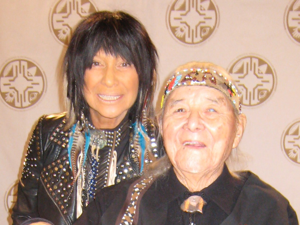

Monday, March 10, 2014


